

Advanced Intraocular Lens (IOL) Implants
Today’s advanced intraocular lens implants, of which there are many different designs, are light years ahead of the standard monofocal variety, providing life changing vision without the burden of spectacles, contact lenses or reading glasses. It is the art and science of choosing and implanting these technological wonders that has captivated Dr. Hamilton for more than 2 decades as he continues to provide outstanding outcomes for his patients.
With that in mind, it is very important for patients to understand that every advanced intraocular lens (IOL) implant involves a tradeoff. Lenses with concentric rings can restore all three vision zones without glasses, but they filter light in ways some patients may notice seems different than what they have been accustomed to throughout their life. Lenses without rings preserve sharper, image contrast, but provides only two out of three vision zones. Within the lens without rings category, the Light Adjustable Lens™ (LAL) is a unique option that lets Dr. Hamilton fine-tune your prescription in the office after surgery. Dr. Rex Hamilton performs advanced lens implant surgery in Beverly Hills and across Los Angeles.


There Is No Single “Best” Advanced Lens Implant
Your eye’s natural lens once gave you continuous focus from a book in your hand to a street sign down the block. That flexibility fades with age. By the time you’re a candidate for Refractive Lens Exchange (RLE) or cataract surgery, your natural range of vision is significantly reduced. The intraocular lens (IOL) that Dr. Hamilton implants can restore a range of vision for you without glasses.
For decades, the default (covered by insurance) replacement for your natural lens has been a monofocal lens. It provides one range of vision, usually far vision, does not correct for astigmatism which blurs the vision at all distances, and leaves you requiring reading glasses for anything from computer and closer. The monofocal lenses work well and have decades of clinical data behind them but require glasses for full vision across all three zones. Modern advanced lens implants can do much more. But every one of them makes a tradeoff, and the marketing rarely spells this out.
Dr. Rex Hamilton has performed over 25,000 procedures and personally guides every patient through the lens decision. Your anatomy. Your outcomes.
- The Three Vision Zones
- Correcting Astigmatism
- The Big Picture Choice: Lenses With Rings vs. Lenses Without Rings
- Lenses With Rings
- Lenses Without Rings
- Light Adjustable Lens
- Cataract Surgery vs. Refractive Lens Exchange: FDA Approval Scope
- Who This Discussion Matters Most For
- About Dr. Hamilton
- Reviews and Testimonials
- Frequently Asked Questions
- Book a Consultation
The Three Vision Zones
Advanced lens conversations get simpler once you understand the three ranges you actually use each day.
Near. The reference here is your cell phone. Everyone has one, and cell phone distance is a reasonable target for independence from glasses or readers using modern advanced IOLs. Anything closer than a cell phone, like threading a needle or reading the fine print on a medication insert, is not something these lenses reliably deliver. Grab a pair of over the counter readers for these less common tasks.
Intermediate. This is the range of a laptop or desktop computer, a grocery store shelf, or the details on your car dashboard.
Distance. This covers everything across the room and beyond, including television, street signs, and driving.
Your lifestyle determines which zones matter most. Dr. Hamilton will map the conversation to how you actually spend your day.
Correcting Astigmatism
Correcting Astigmatism If you wear glasses or have had your eyes examined, you are probably familiar with the term “astigmatism”. More than 80% of people have at least 0.5 diopter of astigmatism. What does astigmatism mean?
Astigmatism typically refers to the shape of the cornea, the clear window on the front of the eye. An eye with no astigmatism (very rare) has a perfectly round cornea. An eye with astigmatism has an oval or football shaped cornea. As the light enters the astigmatic cornea, it does not come to a sharp, single focal point on the retina (the film in the camera at the back of the eye). This causes distortion, smeary vision at all distances. Astigmatism occurs independent of whether you are nearsighted or farsighted. When cataracts develop, the lens becomes cloudy and can worsen astigmatism.
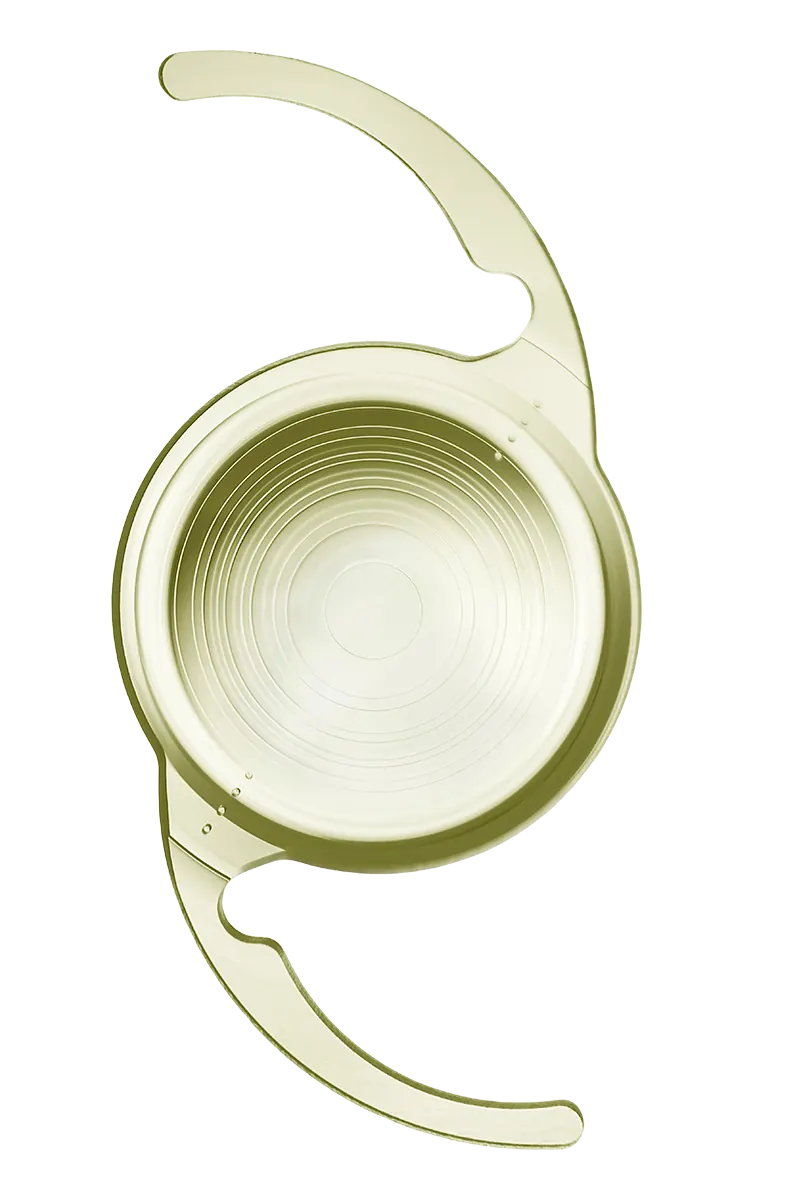
During RLE or premium cataract surgery, astigmatism is treated in one of two ways. For low levels of astigmatism (< 1.0 diopter), a laser is used to create arcuate incisions in the cornea, precisely designed and located, to minimize corneal astigmatism. For higher levels of astigmatism (> 1.0 diopter), the advanced intraocular lens design corrects for the corneal astigmatism (Figure 1 A). These lenses, called Toric IOLs, are available in both categories of advanced IOLs: Lenses With Rings and Lenses Without Rings. Dr. Hamilton will determine which technique for correcting your astigmatism makes the most sense given the unique optics of your individual eyes.
The Big Picture Choice: Lenses With Rings vs. Lenses Without Rings
When you go down a rabbit hole investigating advanced intraocular lenses, either on the web or with a friend or family member who has had the procedure, you will find a dizzying array of jargon and brand names. Multifocal, trifocal, monofocal plus, extended depth of focus (EDOF), full range of vision (FRV), Panoptix Pro, Odyssey, PureSee, Envy, FineVision HP, Vivity, Eyhance, TruPlus.
Forget all of that. Almost every advanced lens implant on the market today falls into one of two categories. Understanding this split is more useful than memorizing brand names and jargon, because it frames the pros and cons of the two different categories.
Lenses With Rings
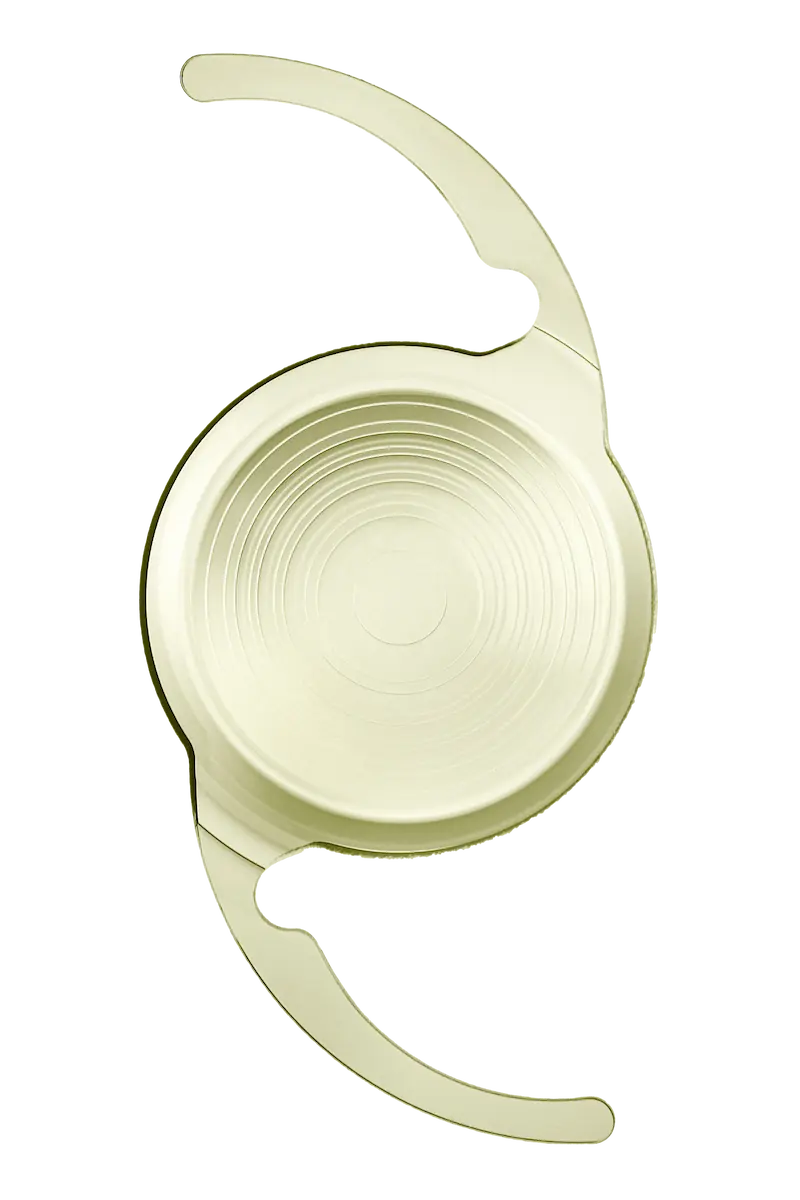
These lenses have a series of concentric rings, technology called diffractive optics, to split incoming light into different focal points which gives you vision across all three zones without glasses. This full range of vision comes with a trade-off: a filter effect on contrast (Figure 1B) and halos around lights at night (Figure 1C).
These phenomena are most apparent right after surgery because, in an instant, Dr. Hamilton changed the optics your brain had been used to your entire life. The brain notices this abrupt change but gets used to it over time, a concept known as neuroadaptation. You have already experienced this if you wear a watch, fitness wrist band, earrings, necklace or other jewelry. You don’t constantly feel these items on your body unless you think about it… then you feel them.
In the clinical trial of the Odyssey lens, for example, the patients were asked one month after surgery if they were significantly bothered by night halos. Only 3% of patients said yes. The other 97% said they notice them but they were no longer bothersome. In the same study, 94% of patients were satisfied with their overall vision without glasses, 96% with reading on a smartphone or tablet, and 92% with seeing steps and curbs at night. A 2020 peer-reviewed review in Ophthalmology summarizes how photic (stray light) phenomena and reduced contrast are inherent to the optical design of these lenses with rings.
Adaptation Timeline
Functional MRI studies of diffractive multifocal IOL patients have shown measurable neuroadaptation between three weeks and six months. Follow-up work has confirmed the pattern using resting-state fMRI. Most of Dr. Hamilton’s patients notice a clear reduction in dysphotopsia by the one-to-three-month mark.
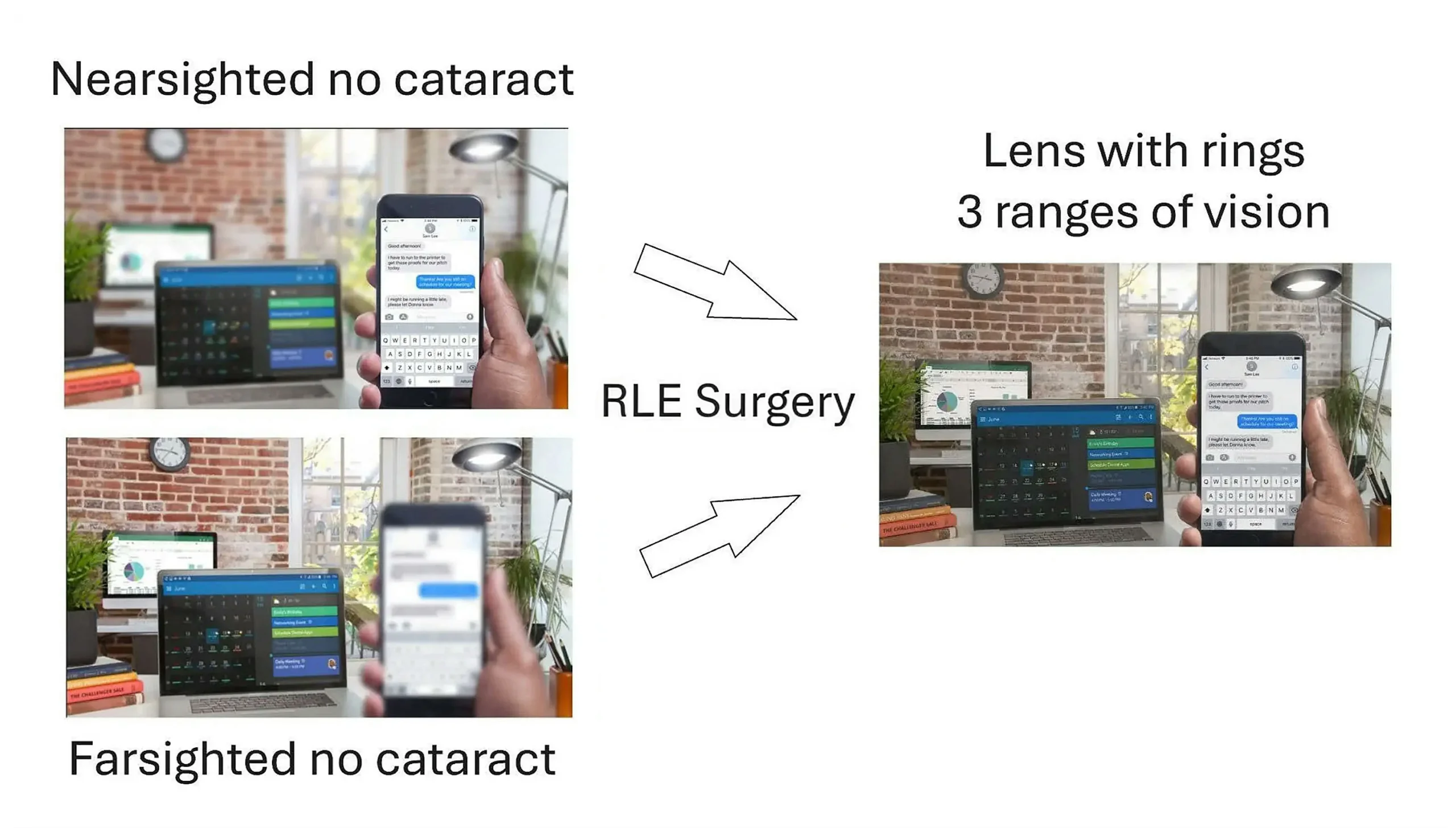
Figure 1B: Multifocal optics provides 3 ranges of vision but with a mild reduction in image contrast. 1A: Young patients without cataracts undergoing RLE surgery may notice this reduced contrast because the natural lens that was removed provided high contrast but poor range. This trade off becomes less obvious over time as the brain adapts to the new optics. (CLICK TO ENLARGE)
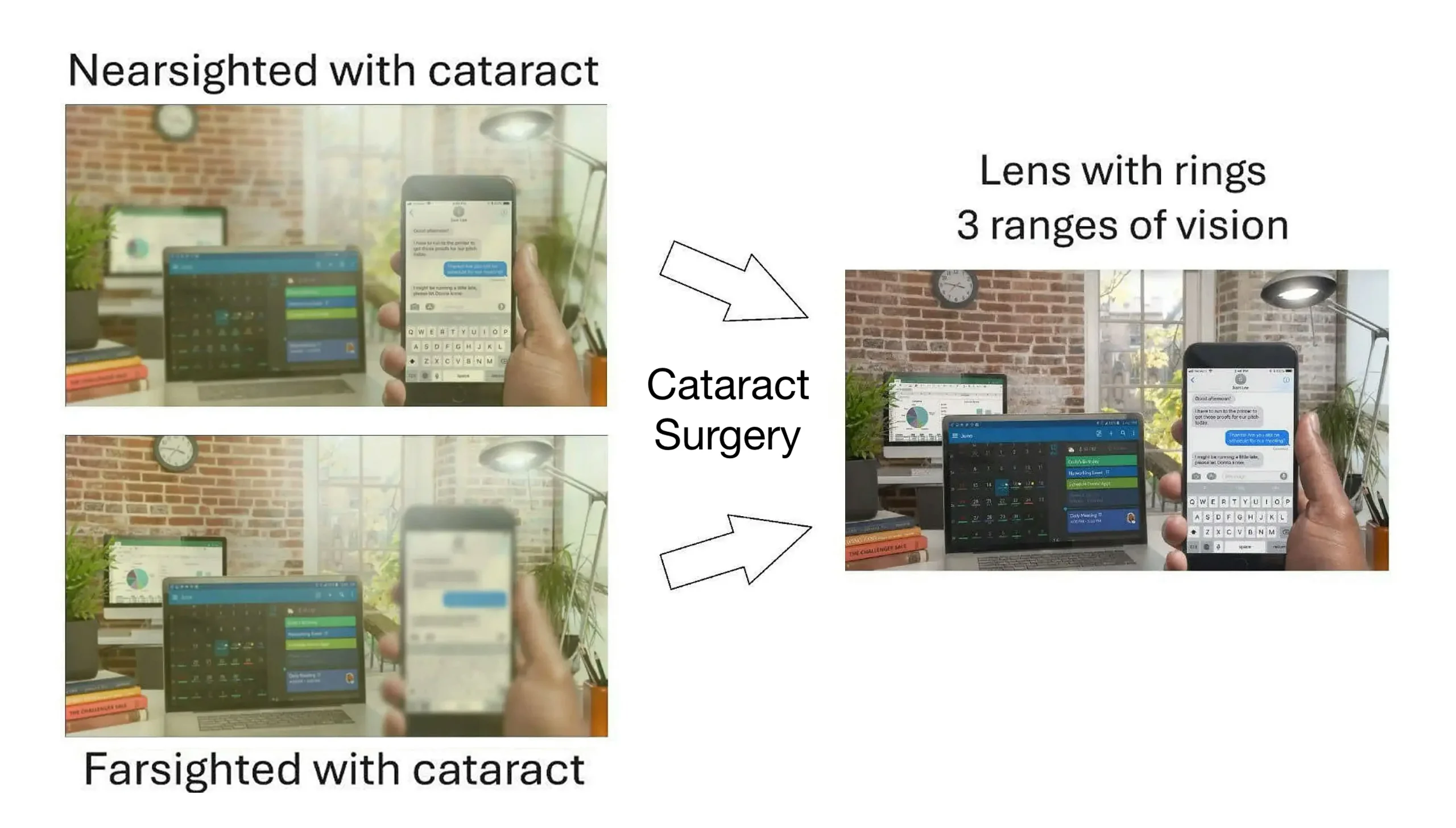
Figure 1C: Older patients undergoing cataract surgery already have some level of reduced contrast from the cataract and, therefore, will be very happy with the new optics very quickly as both the range and quality of vision is instantly better. (CLICK TO ENLARGE)

Figure 2A: Patients who receive a lens with rings, either from RLE or cataract surgery, will notice halos around lights at night, such as a headlight or streetlight. These halos are new to the patient’s brain and, consequently, very obvious.
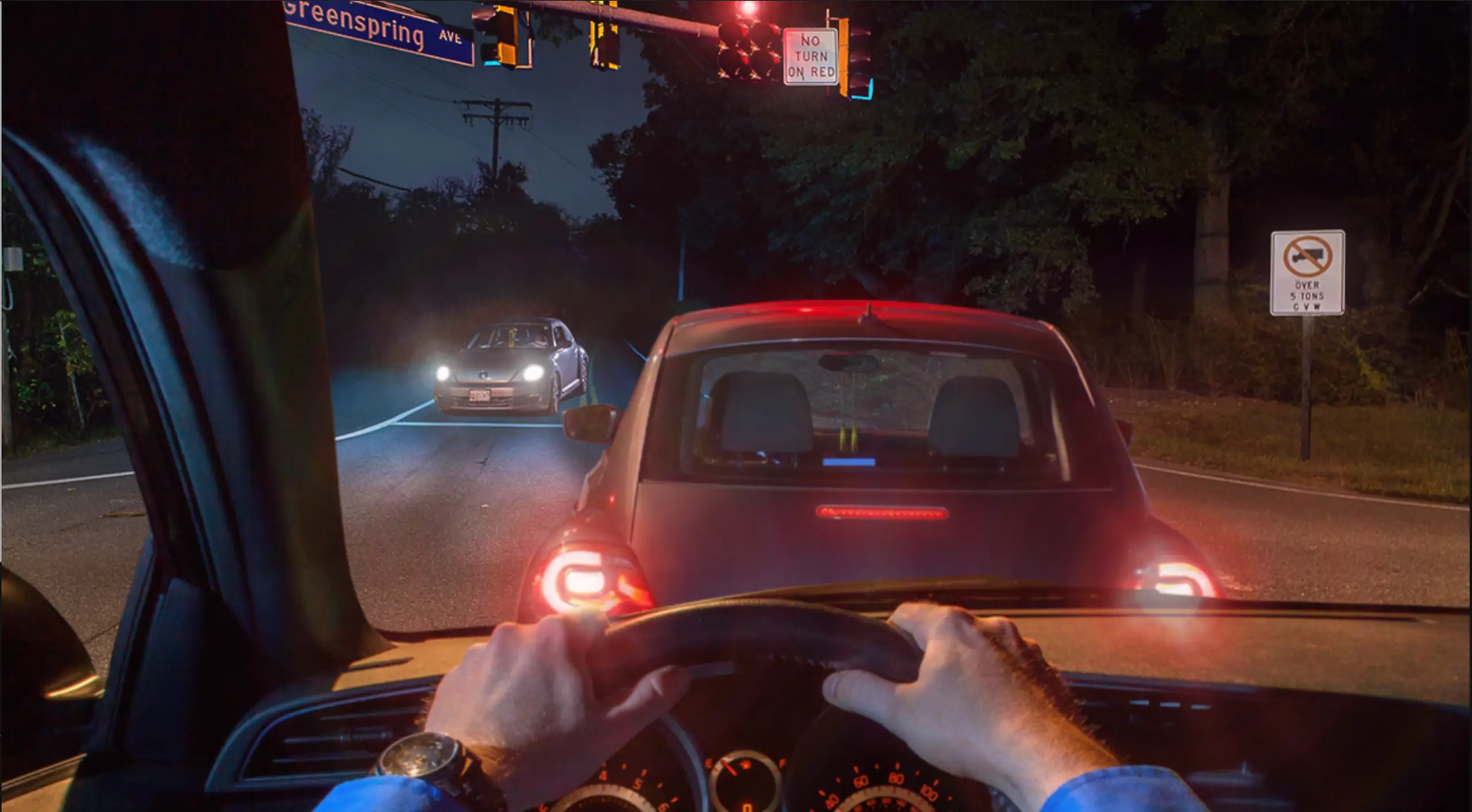
Figure 2B: Over time, the brain adapts to things that are constant and the halos become less obvious over time.
Brand Name Options in Lens With Rings Category and Dr. Hamilton’s Preference
Dr. Hamilton offers four lenses in this category:
- TECNIS Odyssey™, by Johnson and Johnson
- enVista Envy™, by Bausch + Lomb
- PanOptix® Pro, by Alcon
- FineVision® HP, by BVI
Dr. Hamilton tends to favor the Odyssey and Envy lenses because he feels the quality of vision (image contrast) is as good as it gets in this category. Near vision without glasses is often slightly better with the Fine Vision HP and the PanOptix Pro. He will not say one lens is objectively better than the others. He will match the choice to your eyes.
Lenses Without Rings
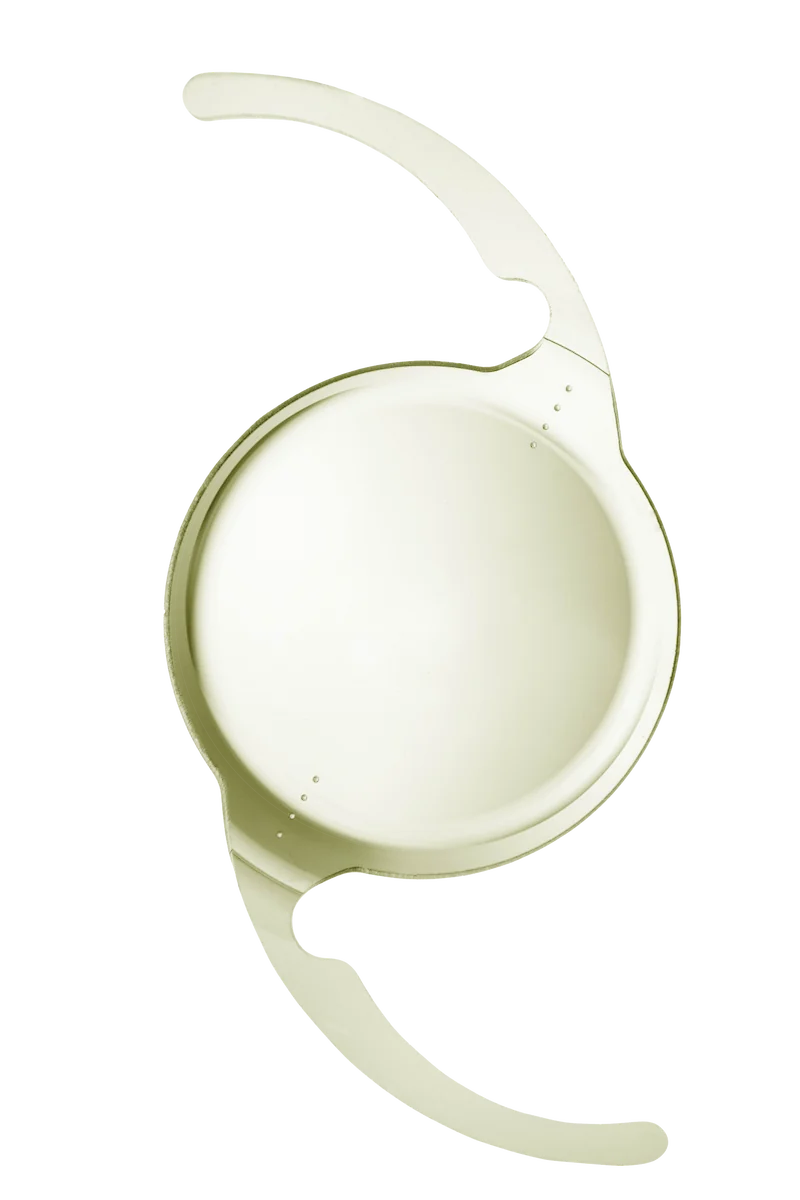
These lenses do not have rings and use advanced, proprietary smooth alterations in curvature from the center to the edge of the optic that provides an extended range of focus. One in particular, the TECNIS PureSee also preserves sharper contrast and image quality than lenses with rings. In fact the TECNIS PureSee is the only lens in either of the categories (lenses with or without rings) that does not contain a label from the FDA about reduced contrast.
The trade-off is that these lenses without rings provide vision across two adjacent ranges: either distance and intermediate or intermediate and near. For patients desiring freedom from glasses, Dr. Hamilton can make use of the fact we have two eyes by targeting distance and intermediate zones in one eye and intermediate and near in the other. This blended vision approach can work very well using the TECNIS PureSee IOL from this category (Figure 3).
Another unique lens in this category is the RXSight Light Adjustable Lens. The power of this lens can be adjusted after surgery using a light exposure procedure in the office. Dr. Hamilton has extensive experience with the Light Adjustable Lens and will discuss it with you if he feels it is your best option.
Figure 3: In patients who desire vision without glasses from cell phone out to the distance, Dr. Hamilton can use the TECNIS PureSee IOL in a blended vision fashion. One eye is targeted to cover distance and intermediate vision (3A) while the other eye is targeted to cover intermediate and near (3B). Again, through neuroadaptation, the brain learns to blend the images into seamless vision across all three ranges.
3A:

3B:

Brand Name Options in the Lens Without Rings Category and Dr. Hamilton’s Preference
Dr. Hamilton offers three lenses in this category:
- TECNIS PureSee™ by Johnson and Johnson
- Light Adjustable Lens™ by RXSight
- Vivity® by Alcon
Of all the lenses available today, the TECNIS PureSee is the one Dr. Hamilton is most excited about. He calls its combination of contrast and range the most impressive he has seen in years, and for the right eye it is often his first recommendation. It also provides enough range that he does not need to choose a large power offset between the two eyes to achieve three ranges of vision without glasses.
PureSee is the first extended depth of focus lens the FDA has cleared without a contrast-sensitivity warning. It delivers the same level of contrast as a monofocal lens while still extending your range, which is what makes it a meaningful option for eyes that need to protect every bit of contrast. Because the optic is not splitting light, patients keep sharper contrast, particularly in low light. This means the PureSee is appropriate even in patients with other problems with their eyes, such as glaucoma, macular degeneration, severe dry eye or diabetic retinopathy.
For patients with early macular degeneration or mild glaucoma undergoing cataract surgery, the PureSee lens is a meaningful option. Recent peer-reviewed data on extended depth of focus IOLs supports the case that these patients no longer have to accept the limited range of a monofocal to preserve contrast.
- Vision zones: With Rings – All three (near, intermediate, distance). Without Rings – Two of three (can get all three when set up as blended vision).
- Glasses: With Rings – Least dependence. Without Rings – Mild readers for fine near.
- Night vision: With Rings – Some halos, fades with adaptation. Without Rings – Minimal halos.
- Vision Quality: With Rings – Mild contrast reduction. Without Rings – No contrast reduction (PureSee).
- Adaptation: With Rings – 1-3 months. Without Rings – Minimal.
- Named lenses: With Rings – TECNIS Odyssey, enVista Envy, PanOptix Pro, FineVision HP. Without Rings – TECNIS PureSee, Vivity.
- Best for: With Rings – Full range without glasses. Without Rings – Prior PRK/LASIK/SMILE, patients concerned about contrast and night halos, early macular degeneration / mild glaucoma (PureSee).
All three (near, intermediate, distance)
Two of three (can get all three when set up as blended vision)
Least dependence
Mild readers for fine near
Some halos + filter effect, fades with adaptation
Sharper contrast, minimal halos
1–3 months
Minimal
TECNIS Odyssey, enVista Envy, PanOptix Pro, FineVision HP
TECNIS PureSee, Vivity
Full range without glasses
Prior PRK/LASIK/SMILE, patients concerned about contrast and night halos, early macular degeneration / mild glaucoma (PureSee)

Cataract Surgery vs. Refractive Lens Exchange: FDA Approval Scope
Every advanced lens implant discussed here was approved by the FDA for use in cataract surgery. None of the lenses discussed here are FDA-approved for Refractive Lens Exchange (RLE), because the clinical trials enrolled cataract patients. When Dr. Hamilton uses these lenses in an RLE patient, it is an off-label application, which is a legally recognized part of medical practice.
The clinical performance of the lens is identical whether it is implanted in conjunction with cataract surgery or RLE. However, you will see the term “off-label” when reading your consent form if you are undergoing RLE.
Refractive Lens Exchange is not right for everyone. Dr. Hamilton reviews your full eye health at consultation to determine whether RLE, and which lens, is the right choice for you.
Who This Discussion Matters Most For
The patients who most need to hear the contrast tradeoff discussion are RLE candidates, not classic cataract patients. If you have a visually significant cataract, your starting vision is already compromised with regard to image contrast. Almost any advanced lens improvement will feel dramatic, including the mild filter effect associated with lenses with rings.
The patient who comes in with excellent uncorrected distance vision and is straining and struggling with near vision tasks is very different. Consider a 48-year-old who walks in and says, “I don’t want to wear these reading glasses anymore.” Distance vision is still excellent. Only the near vision is frustrating. None of the advanced IOLs available allow Dr. Hamilton to change only the near vision, because the lens replaces the whole optical system. Any lens choice will change how distance vision looks too. These patients, specifically those receiving a lens with rings, must understand there will be a period of a few months when the distance vision quality seems different than what they are used to. Over time the brain adapts to the “new normal”.
One last important point to realize: once the natural lens is replaced, the patient will never experience the degradation of vision associated with cataracts. The advanced IOL will stay the same for the rest of the patient’s life. This prophylactic aspect of RLE is a significant advantage and helps, psychologically, for patients to understand that a few weeks or months of adaptation to the new optics are well worth the benefit of not needing glasses and never getting a cataract.
For the RLE patient, the change in contrast is the biggest temporary challenge to hear about prior to moving forward with RLE surgery. RLE candidates should not learn about the filter effect when they perceive it after surgery. Peer-reviewed guidance on multifocal IOL patient selection reinforces that pre-operative patient counseling is a stronger predictor of satisfaction than any single lens design.

About Dr. Hamilton
Dr. Rex Hamilton MD, MS, is a board-certified ophthalmologist, Charter Fellow of the World College of Refractive Surgery and Visual Sciences (FWCRS), and Fellow of the American College of Surgeons (FACS). He has performed over 25,000 procedures and personally trained more than 200 eye surgeons.
He was the first surgeon in Los Angeles to implant a TECNIS Symfony IOL (an older lens with rings), the first at UCLA to use intraoperative aberrometry, and the first at UCLA to perform laser cataract surgery. He was Professor of Ophthalmology at the UCLA Stein Eye Institute, Medical Director of the UCLA Laser Refractive Center, and participated in the original Light Adjustable Lens™ clinical trial at the UCLA Stein Eye Institute. He serves as a Key Opinion Leader for Johnson and Johnson Vision, Alcon, Carl Zeiss Meditec, BVI, Staar Surgical, and RXSight.
You are choosing a lens that stays in your eye for the rest of your life. Dr. Hamilton personally guides every diagnostic exam, surgical decision, and follow-up visit at Hamilton Eye Institute.
Reviews and Testimonials
Frequently Asked Questions
For healthy eyes, yes. Advanced lens implants reduce dependence on glasses after cataract surgery or RLE. Standard monofocal lenses do not do that. Whether an advanced lens is right depends on your eyes and how you weigh the tradeoffs at consultation.
It depends on which category of lens Dr. Hamilton and you end up choosing as well as the overall health of the rest of your eye. Lenses with rings often provide functional near vision up to the level of a cell phone without glasses. Lenses without rings can also cover up to the cell phone distance if they are implanted in a blended vision fashion. Very fine near tasks, like threading a needle or reading small print on a medication package insert, may still require over the counter reading glasses.
Most patients adapt to a lens with rings between one and three months after surgery. Neuroadaptation, the process by which your brain learns to ignore competing optical signals, is documented in the peer-reviewed literature. Halos and mild loss of contrast in the early weeks usually reduce meaningfully by the three-month mark.
Not universally. It is Dr. Hamilton’s preference for some patients with prior corneal refractive surgery, such as radial keratotomy, because those eyes may be harder to measure pre-operatively. This could lead to a residual glasses prescription following surgery. In this case, the ability to adjust the lens power in-office is an advantage. For patients with healthy, unoperated eyes, Dr. Hamilton often leans toward a lens with rings or a lens without rings (TECNIS PureSee), because both usually deliver an excellent and predictable outcome faster.
Yes, but off-label. None of the lenses discussed are FDA-approved specifically for RLE. All were approved for cataract surgery. Off-label use is a legally recognized part of ophthalmic practice, and the lens performs the same optically in both settings.
Every intraocular procedure carries risk. These include infection, inflammation, IOL dislocation, and retinal detachment. The risk of each of these potentially serious complications is much less than 1%. The most common issue that can arise after RLE/cataract surgery is a refractive outcome that fall short of the target, either the distance vision or near vision is not sharp enough. This can happen if the healing process of an individual eye differs from the norm. In these cases, a secondary procedure, such as an IOL Exchange, LASIK or PRK can be performed to correct the refractive error and improve the vision without glasses. In general the risk of needing a secondary procedure is 1-2%. Dr. Hamilton reviews individual risks based on your eye anatomy, prior surgeries, and general health.
1 Rampat R, Gatinel D. Multifocal and Extended Depth-of-Focus Intraocular Lenses in 2020. Ophthalmology. 2021;128(11):e164-e185. DOI: 10.1016/j.ophtha.2020.09.026. Supports: photic phenomena, contrast loss, and neuroadaptation as class-wide characteristics of ring-based IOL designs.
2 Rosa AM, Miranda ÂC, Patrício MM, et al. Functional magnetic resonance imaging to assess neuroadaptation to multifocal intraocular lenses. J Cataract Refract Surg. 2017;43(10):1287-1296. DOI: 10.1016/j.jcrs.2017.07.031. Supports: neuroadaptation timeline between three weeks and six months.
3 Zhang L, Lin D, Wang Y, et al. Comparison of Visual Neuroadaptations After Multifocal and Monofocal Intraocular Lens Implantation. Front Neurosci. 2021;15:648863. DOI: 10.3389/fnins.2021.648863. Supports: resting-state fMRI confirmation of neuroadaptation patterns.
4 Johnson & Johnson Surgical Vision. TECNIS Odyssey IOL product information. URL: https://www.jnjvisionpro.com/en-eu/products/tecnis-odyssey/. Supports: the halo, glare, and starburst outcome cited in the body — 93% of patients experienced none or mild halos, glare, or starbursts at one month post-op (n=96, retrospective real-world analysis, values rounded). Taken from J&J’s TECNIS Odyssey manufacturer product information; confirm against the current FDA-cleared Directions for Use before publishing.
5 Savini G, Galzignato A, Coutinho CP, et al. Influence of preoperative variables on the 3-month functional outcomes of the Vivity extended depth-of-focus intraocular lens: a prospective case series. Eye Vis (Lond). 2025;12(1):8. DOI: 10.1186/s40662-024-00424-y. Supports: contrast and range outcomes for the extended depth of focus lens category. Framing note: single-arm prospective series.
6 Jones M, Terveen DC, Berdahl JP, et al. Clinical outcomes of the light-adjustable lens in eyes with a history of prior corneal refractive surgery. J Cataract Refract Surg. 2024;50(9):936-941. DOI: 10.1097/j.jcrs.0000000000001481. Supports: LAL performance in eyes with prior refractive surgery.
7 Wong JR, Folden DV, Wandling GR, et al. Visual Outcomes of a Second-Generation, Enhanced UV Protected Light Adjustable Lens in Cataract Patients with Previous LASIK and/or PRK. Clin Ophthalmol. 2023;17:3379-3387. DOI: 10.2147/OPTH.S432457. Supports: LAL 20/20 uncorrected results in patients with prior LASIK or PRK.
8 Khoramnia R, Naujokaitis T. Patient selection for multifocal intraocular lenses. Klin Monbl Augenheilkd. 2025;242(7):767-780. DOI: 10.1055/a-2519-4324. Supports: counseling as a predictor of multifocal IOL satisfaction.